Practical fixes
Room Smells Like Old Furniture? Clear the Stale Smell
A room that smells like old furniture needs a little separation: air the room, check the furniture, and notice whether the smell is strongest in damp or enclosed areas. A small dehumidifier suits persistent humidity; charcoal bags suit localized residual odor.
Mini dehumidifier: choose your option
See which model suits your setup, compare the details that matter, and find current shopping options.
Compare Mini dehumidifier options →Your next steps
Locate the strongest smell
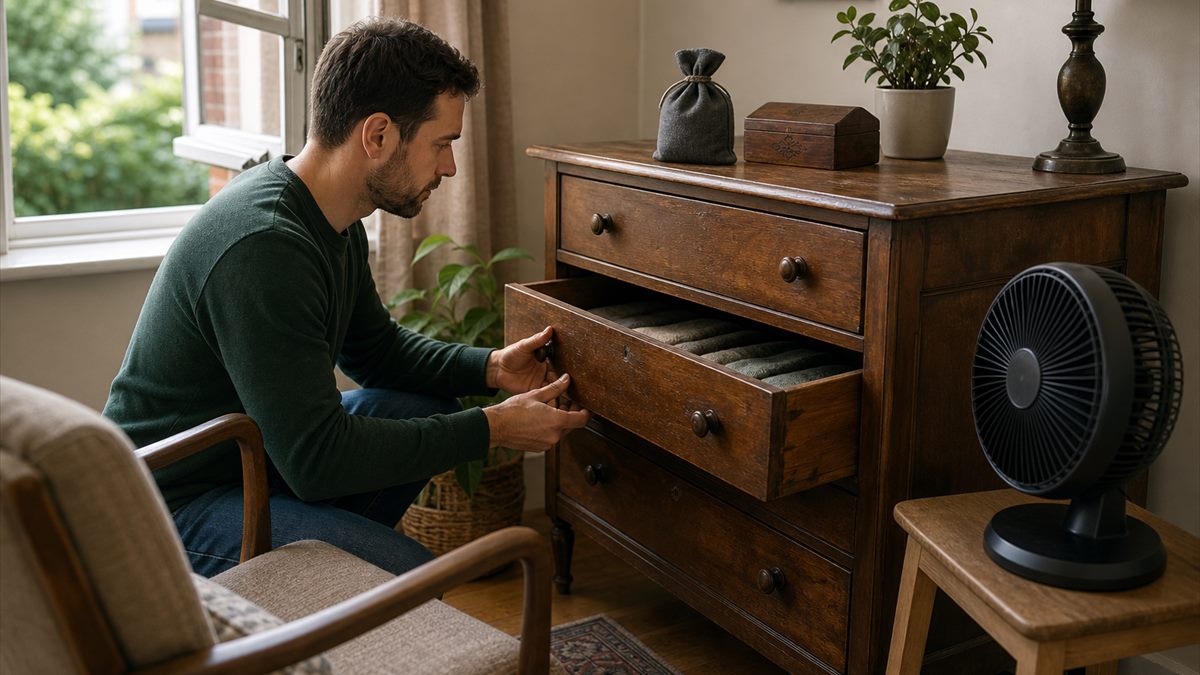
Check drawers, upholstery, the back of furniture, and the wall behind it. Give furniture and the room fresh airflow.
Clean the material appropriately
Vacuum fabric and clean hard surfaces with a finish-compatible product. Let everything dry before closing drawers or pushing furniture back.
Match the product to the space
Compare a mini dehumidifier for a suitably sized damp room, or charcoal bags for a dry enclosed cabinet or drawer. Leave a little clearance around furniture for airflow.
Match the right product to this fix
You have the practical steps. Now compare the product options for this job, with clear model differences and the features that make everyday use easier.
Compare Mini dehumidifier options →Compare Charcoal odor absorber bag options →Match the product to your situation
| Your situation | Useful product | What to compare |
|---|---|---|
| Small room stays humid | Mini dehumidifier | Compare room size, capacity, and emptying routine. |
| Smell is inside dry furniture | Charcoal odor absorber bags | Compare bag size and placement. |
When the odor extends beyond the furniture
If the same smell occurs in several rooms, compare the whole-house wood and moisture checks before treating one chair or cabinet as the source.
Explore specific situations
- Home Odor Source: A Practical Room-by-Room Check
- House smells like wood
- Musty Smell Diagnosis: Find the Source First
- Wood smell in the home
- Apartment smells like wood
- Old furniture smell in a room: locate the reservoir
- Old wood odor in a bedroom: check furniture and moisture
- Room smells musty with old furniture: inspect both
- Room smells woody: dry wood, new finish or dampness?
- Stale room smell from furniture: compare air and items
- How to ventilate old furniture smell safely
By Smells Like Wood. See our editorial method and contact page for corrections. Content reviewed . General household guidance; this is not a professional inspection or a medical assessment.
Mini dehumidifier: choose your option
See which model suits your setup, compare the details that matter, and find current shopping options.
Compare Mini dehumidifier options →Browse all fixes on the homepage
Useful answers before you choose
Why does my room smell old even after cleaning?
Cleaning surfaces may not remove odor from furniture, humidity, or low airflow. The source can keep releasing odor after the room looks clean.
Is old furniture smell the same as VOCs?
Sometimes. Wood, finishes, adhesives, and stored products can release VOCs, but musty odors can also come from moisture or mold.
Should I open windows all day?
Ventilation helps, but in humid weather it can add moisture. Pair airflow with humidity control when the room is damp.
When should I worry?
Worry more if the smell is worsening, chemical-sharp, associated with irritation, or paired with visible moisture or mold.