Source-first home odor diagnosis
Find the Source of a Musty, Woody, Sour, or Chemical Smell
Start with where the smell is strongest, when it returns, and whether it transfers to fabric. Those clues help separate moisture and slow drying from wood or finish odor, washer residue, low airflow, or a new-material VOC concern.
Best for: clean homes where clothes, closets, drawers, towels, rooms, or new furniture keep picking up a smell that returns after normal cleaning.

If a woody or wet-wood smell travels beyond one cupboard, use the whole-house wood-smell guide to compare rooms, furniture and dampness before treating a single item.
The 4-signal smell check
Most odor advice starts with a product. This site starts with the signal that tells you where the odor is coming from. Use the table below to choose the right guide and avoid treating the wrong surface.
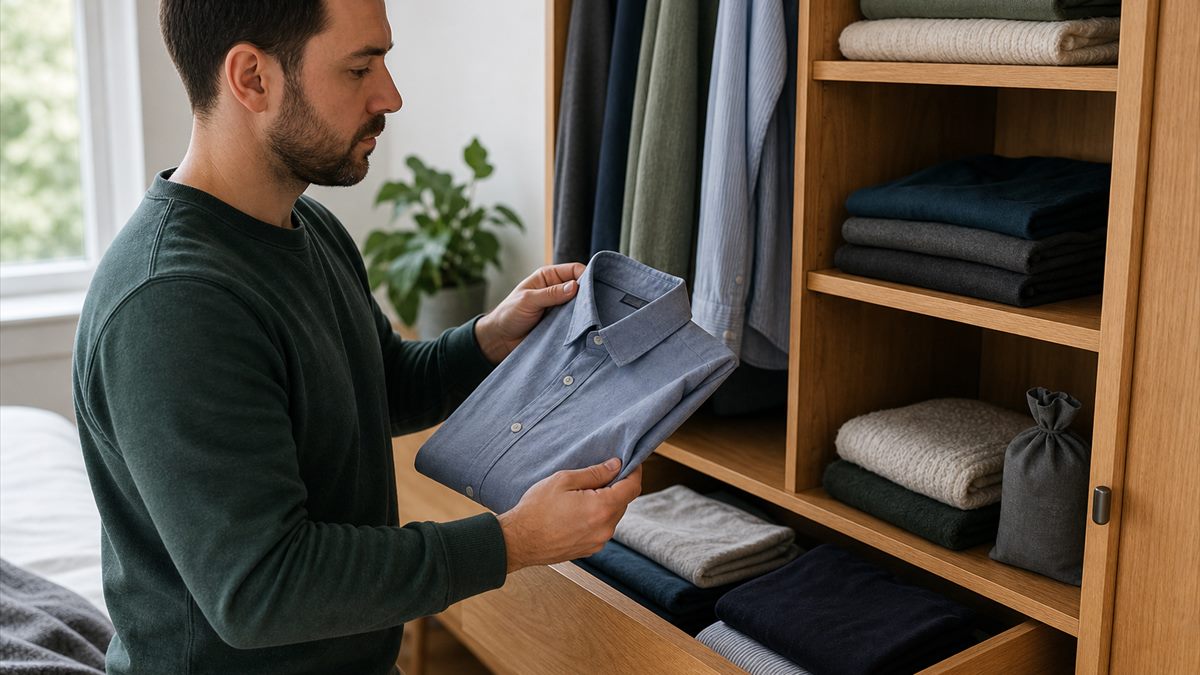
If the smell is strongest in storage air, start with the musty closet guide. If clean fabric picks up the odor after storage, compare that with the clothes-and-cupboard path before rewashing everything again.
| Signal | Likely reservoir | Best first guide |
|---|---|---|
| Smell is strongest inside an empty closet | Moisture and low airflow | Closet smells musty |
| Fabric smells woody after storage | Closet or drawer air, not the wash | Clothes smell like wood |
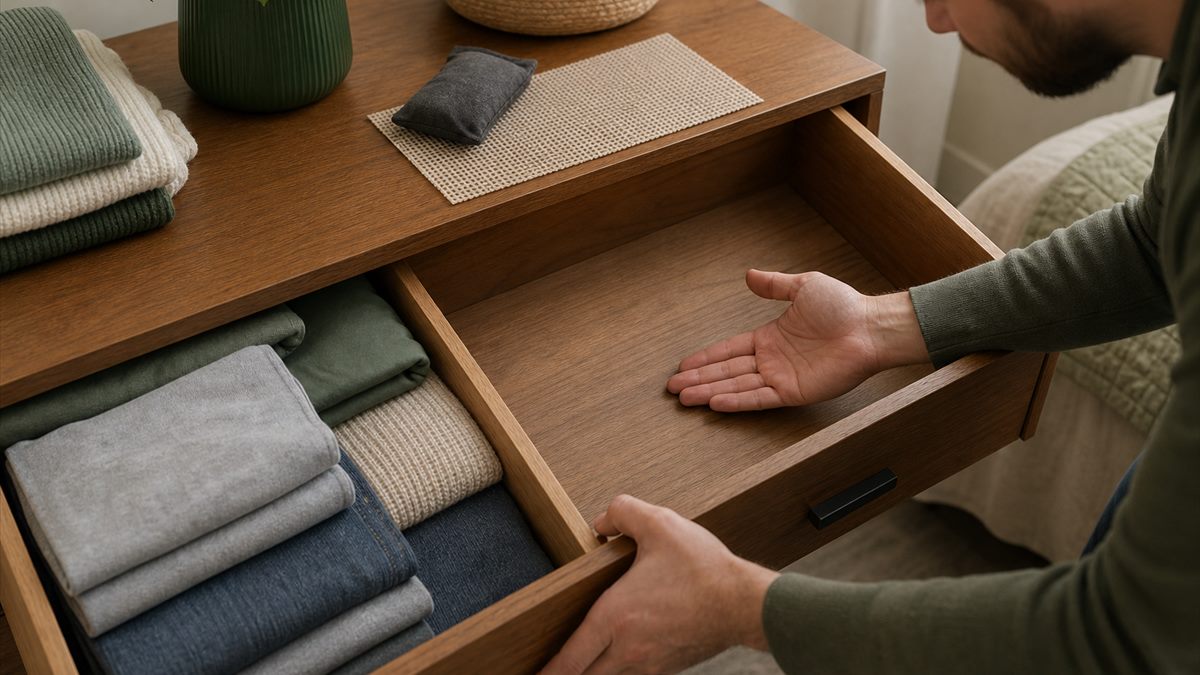
| Empty drawer still smells old | Wood, finish, liner, or trapped humidity | Drawers smell old |
| Smell is earthy, damp, or like dry rot | Moisture in wood, wall cavities, flooring, or stored items | Check for hidden moisture |
| Whole room smells stale after windows close | Furniture, low ventilation, humidity, or a combination | Room smells like old furniture |
| Towels smell sour when wet | Residue and slow drying in fabric | Towels smell after washing |
| New item smells sharp or chemical | VOC off-gassing from materials or finish | New furniture smells like chemicals |
Visual diagnosis library
These examples show three common places that hold and transfer odor: stored fabric, closed closets, and old drawers.

The source-first method
Smell the closet, drawer, room, towel, or furniture without the other items inside.
Musty and damp signals point one way; sharp, sweet, or chemical signals point another.
If the storage air still smells, rewashing clothes or towels only resets the symptom.
Close the space again and check whether the odor returns before escalating products.
Products only after the source is clear
Start with the matching diagnosis. If it points to a specific product class, use these guides to compare fit and limitations before price or brand.
Compare product options
Compare product specifications and model options in the guides below.
Moso Natural Air Purifying Bag 200g
A compact fragrance-free bag for targeted storage placement.
A compact fragrance-free bag for targeted storage placement.
A convenient choice when you prefer a dry, fragrance-free bag over a scented spray or a liquid-collecting absorber.
Moso Natural Air Purifying Bag 600g
A larger fragrance-free bag to compare for open storage positions.
A larger fragrance-free bag to compare for open storage positions.
A convenient choice when you prefer a dry, fragrance-free bag over a scented spray or a liquid-collecting absorber.
Crystalino 6 Percent Cleaning Vinegar Cleaner
A cleaning-vinegar listing to compare by concentration and permitted uses.
A cleaning-vinegar listing to compare by concentration and permitted uses.
Relevant when your intended laundry treatment specifically calls for a compatible vinegar product and measured dilution.
DampRid Refillable Moisture Absorber
A shelf-friendly refillable tub for passive moisture collection.
A shelf-friendly refillable tub for passive moisture collection.
Useful for enclosed wardrobes, cupboards and storage corners where clothes pick up a damp smell. Fragrance-free versions suit people who want a neutral result around clothing.
Source-backed safety boundaries
- EPA mold and moisture guidance - used for moisture and mold boundaries.
- CDC mold health guidance - used for musty odor caution and vulnerable groups.
- EPA VOC guidance - used for new furniture and finish/off-gassing topics.
- Department of Energy ventilation guidance - used for airflow and ventilation tradeoffs.
Specific smell situations
These are the narrow guides for the exact ways people describe recurring smells in clothes, closets, drawers, rooms, towels, and new furniture.
Closets and humidity
Clothes and cupboards
Drawers and old wood
Towels and laundry residue
Rooms and furniture air
New furniture and VOCs
Questions people ask about persistent wood-like odors
Where should I start if several things smell bad?
Start with the place where the smell is strongest while empty: closet, drawer, room, towel, or furniture. Treat the source first, then wash or refresh fabric after the source stops feeding odor back into it.
Is a woody or musty smell always mold?
No. A musty smell can point to moisture or mold risk, while a sweet woody or chemical smell can point to wood, finish, adhesive, or particleboard VOCs. Visible mold, leaks, symptoms, or worsening odor deserve more caution.
What should I do if the smell is like dry rot?
Treat a dry-rot-like smell as a moisture clue first. Check for damp wood, leaks, soft surfaces, stains, and poor ventilation before using fragrance or odor absorbers.
Why do product-only fixes fail?
Product-only fixes fail when the product treats the air or fabric but not the reservoir. The site uses a source, airflow, moisture, and retest sequence so you do not keep choosing products blindly.
Are product links the main point of the site?
No. The first goal is to help you find and reduce the odor source. Some product links may earn a small commission at no extra cost to you, but they are optional and should only be used when they fit what you found.