Practical fixes
Drawers Smell Old? Make Storage Fresh Again
When drawers smell old, empty them, clean the surfaces, and let them dry completely. A fresh drawer liner makes the space easier to use; a charcoal bag is a useful companion for a lingering smell in otherwise dry wood.
Drawer liner: choose your option
See which model suits your setup, compare the details that matter, and find current shopping options.
Compare Drawer liner options →Your next steps
Take everything out
Remove old liners and check whether the odor comes from the drawer, the liner, or its contents. Air items separately.
Clean and allow complete drying
Use a finish-compatible cleaner and avoid soaking the wood. Keep the drawer open until dry.
Refresh the storage surface
Choose a liner that fits the drawer and allows the drawer to close easily. Add a charcoal bag for residual odor and store only dry items.
Match the right product to this fix
You have the practical steps. Now compare the product options for this job, with clear model differences and the features that make everyday use easier.
Compare Drawer liner options →Compare Charcoal odor absorber bag options →Match the product to your situation
| Your situation | Useful product | What to compare |
|---|---|---|
| Need a fresh storage surface | Drawer liner | Compare roll dimensions, grip, and cut-to-fit options. |
| Dry wood still has a stale smell | Charcoal odor absorber bags | Choose a size that leaves room for your contents. |
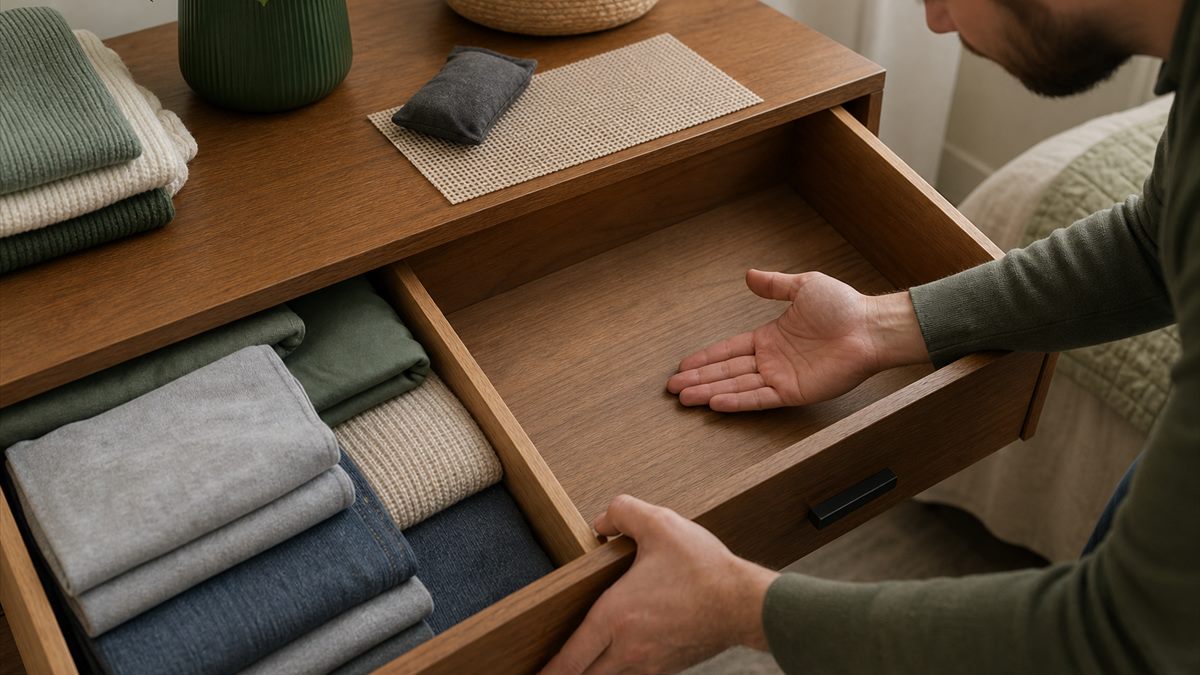
When an old drawer smells damp
If the smell is musty rather than simply stale, use the empty-drawer and fabric comparison before adding a liner or cleaning fluid.
Explore specific situations
- Mothball smell in old furniture: handle residues carefully
- Clothes smell like the drawer: isolate the source
- Cedar drawer smell: wood scent or a moisture problem?
- Old drawer liner smells: remove it before treating wood
- Dresser drawers smell musty
- How to deodorize wooden drawers without soaking them
- Old furniture drawer smell: liner, wood or dampness?
- Wood drawers make clothes smell: isolate wood and fabric
By Smells Like Wood. See our editorial method and contact page for corrections. Content reviewed . General household guidance; this is not a professional inspection or a medical assessment.
Drawer liner: choose your option
See which model suits your setup, compare the details that matter, and find current shopping options.
Compare Drawer liner options →Browse all fixes on the homepage
Useful answers before you choose
Why do only drawer-stored clothes smell old?
The drawer is the common source. Closed wood, finishes, dust, and humidity can transfer odor into fabric over time.
Should I line the drawer immediately?
Not immediately. First air out and deodorize the drawer so a liner does not trap the original odor underneath.
Can old furniture release VOCs?
Furnishings and finishes can emit VOCs indoors. Ventilation and source reduction matter more than fragrance.
When should I stop using the drawer?
If the drawer is damp, visibly moldy, or causes irritation, stop storing clothes there until the moisture or surface problem is fixed.