Practical fixes
Closet smells musty
If your closet smells musty, empty it and inspect the back wall, corners and stored items for moisture. Drying and correcting the source come before odor absorbers; a clean-looking wall does not rule out a hidden moisture problem.
Closet moisture absorber: choose your option
See which model suits your setup, compare the details that matter, and find current shopping options.
Compare Closet moisture absorber options →Your next steps
Empty and air out the closet
Remove clothes and boxes, open the doors, and check the back wall, corners, and floor for dampness. Dry the space before putting things back.
Match the product to what remains
Use a moisture absorber for a damp enclosed space. For a dry closet with a lingering stale smell, compare charcoal odor absorbers. Visible mold needs suitable surface treatment and correction of the moisture source.
Keep the fresh result
Return fully dry clothes, leave a little space between items, and check or replace the absorber according to its instructions.
Match the right product to this fix
You have the practical steps. Now compare the product options for this job, with clear model differences and the features that make everyday use easier.
Compare Closet moisture absorber options →Compare Charcoal odor absorber bag options →Match the product to your situation
| Your situation | Useful product | What to compare |
|---|---|---|
| Small closet feels damp | Closet moisture absorber | Compare hanging bags and refillable tubs. |
| Dry closet still smells stale | Charcoal odor absorber bags | Compare sizes and placement options. |
| Visible mold on a suitable surface | Mold control spray | Check the surface and label instructions. |
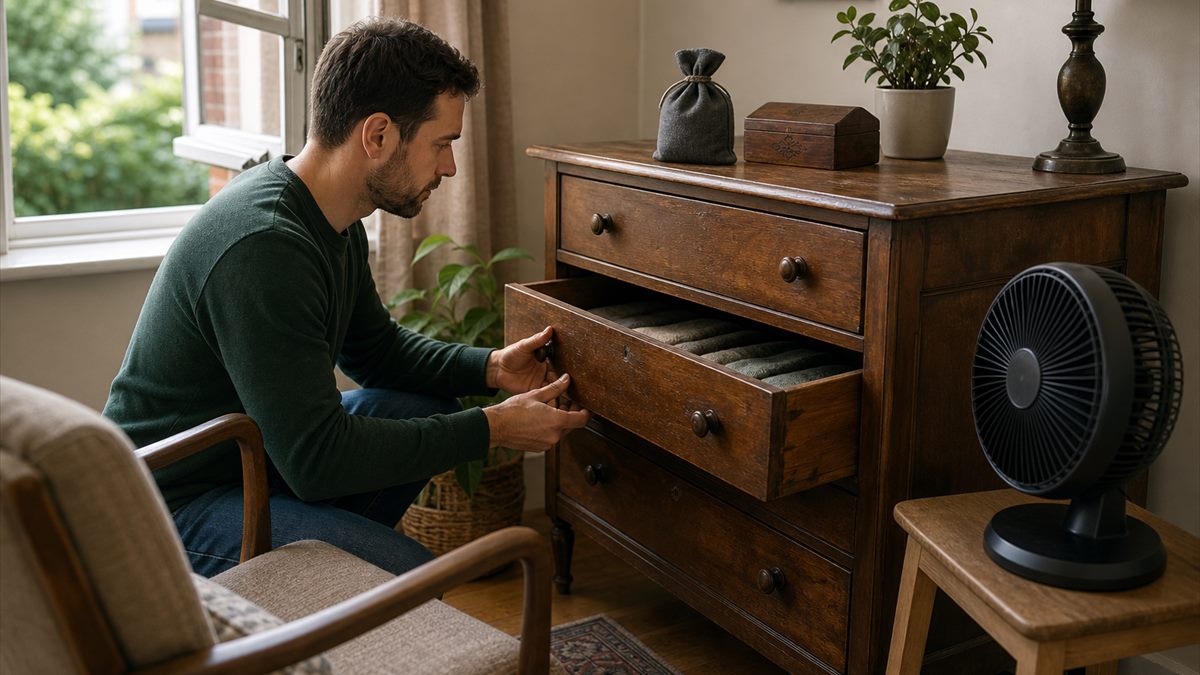
The back wall may differ from the room air
Move boxes and clothing away from the wall so you can inspect it. Note condensation, staining and whether the smell returns during wet weather. Do not open a suspected moldy wall just to investigate the smell.
For ongoing monitoring, the closet humidity guide explains how a room reading can miss a damp storage area. A musty odor needs an inspection even if one reading looks acceptable.
Use humidity readings as clues, not a clearance test
EPA advises keeping relative humidity below 60%, ideally 30–50% where possible, in its home moisture guidance. Measure inside the closet under normal conditions and address leaks or condensation; an absorber does not repair either.
Explore specific situations
- Closet humidity smell: check moisture and airflow
- Closet moisture absorber: when it helps
- Closet smells moldy with no visible mold
- Closet smells damp: inspect before deodorizing
- How to deodorize a closet after fixing the source
- Musty closet smell: find what stays damp
- Wardrobe smells after rain: inspect dampness and leaks
- What Humidity Should a Closet Be? A Practical Target and Test
- Dehumidifier size for a closet: capacity and safe placement
By Smells Like Wood. See our editorial method and contact page for corrections. Content reviewed . General household guidance; this is not a professional inspection or a medical assessment.
Closet moisture absorber: choose your option
See which model suits your setup, compare the details that matter, and find current shopping options.
Compare Closet moisture absorber options →Browse all fixes on the homepage
Useful answers before you choose
Why does a closet smell musty without visible mold?
Moisture can affect stored materials or concealed surfaces before you see spots. Inspect accessible areas and investigate continuing dampness rather than declaring the closet mold-free.
Can charcoal fix a damp closet?
An odor absorber does not repair a leak or remove the cause of condensation. Deal with the moisture first and use products only for an appropriate remaining problem.
Should I put washed clothes straight back?
Only when both the clothes and the storage space are dry and the moisture source is addressed; otherwise the same odor can transfer again.